Why We Don't Haggle on Price And Why That's Intentional
🔲 One fair price. No haggling. Full transparency.
🔲 Fixed pricing builds trust and protects quality.
🔲 No negotiation, just honest, itemized pricing.
🔲 Clear prices. No games. Respect for our crews.
We want to be upfront about something that surprises a lot of people.
We don’t negotiate our prices. Not a little. Not “sometimes.” Not if you ask nicely.
The number we give you is the number we stand on.
At first glance, that probably sounds rigid, maybe even arrogant. We get why. Most people expect some back and forth, especially in construction. But our refusal to haggle isn’t about being premium, exclusive, or difficult.
It’s about honesty, trust, and how work actually gets done.
The Price Is the Price
When we give you a quote, it’s fully itemized. Materials. Labor. Overhead.
Nothing is hidden. Nothing is bundled to obscure reality. You can check manufacturer pricing. You can compare labor rates to industry standards. You can audit our math.

We built our proposals to survive scrutiny, by homeowners, accountants, lawyers, or even ChatGPT.
If we’re wrong, we want to know. If we’re right, we expect that to matter.
Negotiation Assumes Someone Is Lying
Here’s the uncomfortable truth about haggling. If you counter our price, you’re implicitly saying you believe we padded the numbers. That we came in high expecting to “come down.”
And if we do come down?
Then we’ve just confirmed your suspicion.
Now you’re left wondering, which numbers were inflated? What else isn’t honest? What corners will be cut to make this work?
There is no version of negotiation where both sides are fully truthful and the process still makes sense. Either, the seller lied about the real price, or the buyer is asking the seller to work for less than fair value.
Neither builds trust.

The Real Cost of “Saving Money”
Negotiation doesn’t just cost discounts. It costs time and energy.
We’ve measured it. Back and forth emails, calls, revisions and emotional friction.
On average, haggling burns about 30 minutes per transaction. Across 100+ customers a year, that’s $10,000 to $20,000 annually in pure waste, time that could have gone into actual roofing work.
That inefficiency doesn’t disappear. Someone pays for it eventually.
When the Price Gets Squeezed, the Cut Comes From the Crew
Materials don’t magically get cheaper. Manufacturers don’t offer secret discounts. Insurance, trucks, fuel, and permits don’t vanish.
So when a job gets negotiated down, the margin has to come from somewhere.

It usually comes from the people on the roof.
❌ Bonuses disappear
❌ Crews are short handed
❌ Lunch doesn’t show up
❌ Days get longer
❌ Pressure increases
Our crews know when a job has been squeezed. They feel it.
And we’ve learned something over decades of work, “Spirit determines quality more than skill does.”
A motivated crew with average skills will outperform a demoralized elite crew every time.
This Isn’t Just a Moral Argument
We didn’t arrive at fixed pricing because it “felt right.” We studied the rules.
Our approach aligns with:
✅ The Federal Trade Commission Act (deceptive pricing practices)
✅ The Robinson–Patman Act (price discrimination)
✅ The Indiana Deceptive Consumer Sales Act
✅ Better Business Bureau standards
✅ National Roofing Contractors Association ethics guidelines

And yes, the philosophers agree too.
✓ Kant. If everyone negotiated, commerce would collapse.
✓ Rawls. Behind a veil of ignorance, you’d want one fair price for everyone.
✓ Bentham. Fixed pricing maximizes efficiency and minimizes harm.
Fixed Pricing Was Invented to Stop Exploitation
In 19th century America, almost all commerce involved haggling and prices often changed based on race, class, or appearance.
Department stores like Woolworth’s introduced fixed pricing for a reason, one price for everyone.
No advantage for the aggressive. No penalty for the uninformed. No discrimination disguised as “negotiation.”
Going back to haggling isn’t progress. It’s regression.

Reputation Depends on Consistency
The most common complaints in construction aren’t about workmanship. They’re about pricing, “They quoted X but charged Y”, or “I felt taken advantage of.”
Consumer Reports explicitly warns people to be cautious with negotiable pricing.
Consistency builds trust. Haggling destroys it.
We Show You Our Work, On Paper
Every proposal we deliver breaks down,
✅ Materials (verifiable)
✅ Labor (industry comparable)
✅ Overhead (real operating costs)
We invite you to check it. Google it. Challenge it.
If our numbers don’t hold up, we don’t deserve your business.

This Is About Real People
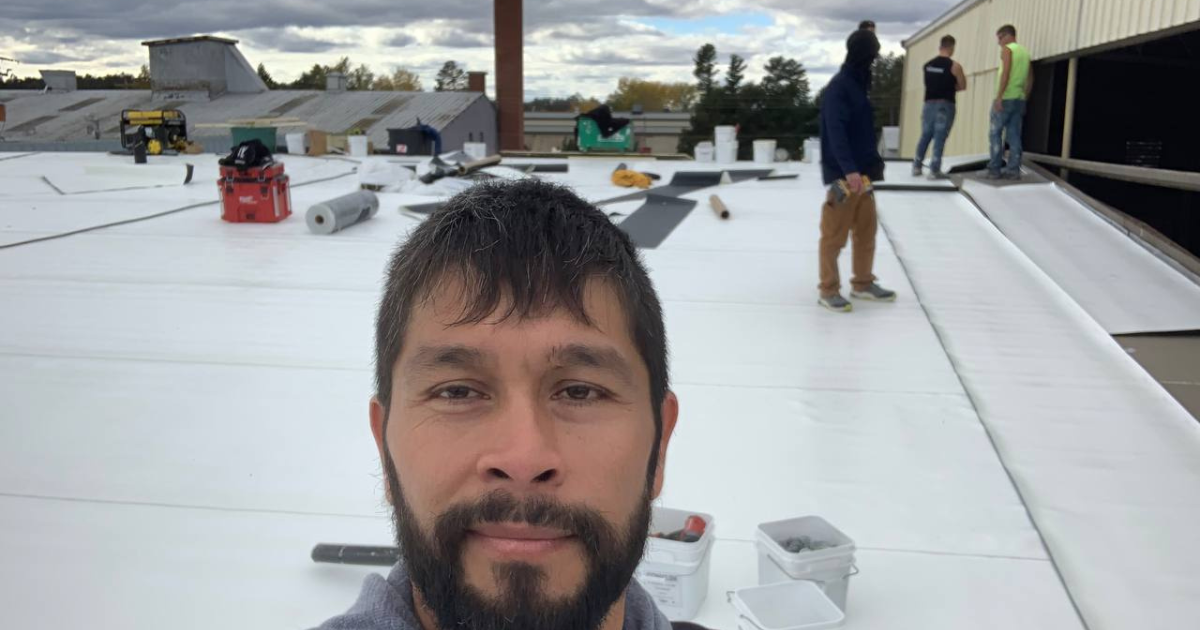
Let us introduce you to Luis.
He’s our lead installer. He has a wife, four kids, and welcomed his fifth two months ago. He shows up at 7 AM. He stays late when the job demands it.
When a job gets negotiated down, Luis feels it.
Maybe not directly in his paycheck, but in the tension, the shortcuts, the pressure.
So we ask a simple question, why would you want to squeeze him?
Our Standing Invitation
We’re not claiming perfection. And we’re not saying negotiation has never worked for anyone.
If you’ve built a successful business through hard negotiation and believe it creates better outcomes, we want to hear that story. If there’s a flaw in our logic, show us.
We’ll even invite you on our podcast to make the case.
Our Position, Plainly Stated
Here’s what it costs. Here’s why. Check our work.
Take it or leave it, without games, pressure, or theater.
In a world where everything feels like a fight, we’ve chosen to remove one battle entirely. And for our customers, our crews, and our sanity, that choice has been worth it.
We Love Conversations
 SoHelpful@PristineIndustrialRoofing.com